Musicians and artists, the booker asked AI about you before they replied

The talent buyer, the festival programmer, the music supervisor, the gallerist and the journalist all do the same thing first. They search your name, or ask ChatGPT about it, and what comes back is a streaming page that lists your songs and says nothing about you, a bio copied from an old press kit, and sometimes another act with your name. MeMyself.fyi builds one record of you on your own domain, so the search that happens before the booking works in your favor.

Guaranteed: your Identity everywhere people search.

A woman raising her hand above a crowd of people, lit by golden light
What you get
  • Your record
  • Personal bio site
  • Found by Google and AI search
  • Press releases
  • Reputation

What a search for your name shows right now

Try it in a private window, with your artist name and then with your own. For most musicians and artists four things come back, and none of them is yours.

  • Streaming pages lead, and they only know your catalog

    Spotify, Apple Music and YouTube rank for your name. They list releases. They do not say where you are from, who you have worked with or how to book you.

  • Another artist has your name

    A singer in another country, a band from the nineties, a painter with the same surname. If Google holds one entry for the name, your work can end up credited to them.

  • Your bio exists in ten versions

    Venue listings, festival programmes, gallery pages and old press kits each carry a different one. AI quotes whichever it finds first.

  • Your link in bio page is a list of links

    It helps a fan who already follows you. It tells Google and AI nothing about who you are, so it never answers the question a booker is asking.

Your name search stops being something that happens to you, and becomes the press kit they read before they book you.

Did you know you have an Identity Score? It's how Google and AI know what to say about you.

Your score is measured out of 100 across 5 different factors, and directly determines when you show up, and how you show up.

  1. 20 points

    Recognition

    Do they know who you are when asked?

  2. 20 points

    Accuracy

    Are your title, company, location and background right?

  3. 20 points

    Distinctness

    Do they mix you up with someone who shares your name?

  4. 20 points

    Source strength

    Do your site, LinkedIn, press, directories and hidden layer (schema) back you up?

  5. 20 points

    Consistency

    Do the same facts show up everywhere?

  • Under 40AI is mostly guessing
  • 40 to 69It knows you in part
  • 70 and upStrong

The solution is a record that tells Google and AI exactly how you want to show up

People see the site, Google and AI read the hidden 'schema' record in the code.

It looks like a personal website, and you can send it to anyone. The difference is underneath. Most sites are written for people, so Google and AI have to guess what they mean. Yours states who you are, what you've done and which profiles are really yours, in the form they read directly.

Then we make the rest of the web agree with it.

  • Profiles that agreeLinkedIn and the rest, matched to the one name, title and headshot your record states.
  • Wikidata, where you qualifyAn entry in the open database Google reads directly.
  • Press releasesYour news put on the record, and linked back to it.
  • Kept currentOn a monthly plan, a fresh scan every month, with anything new waiting for your approval.

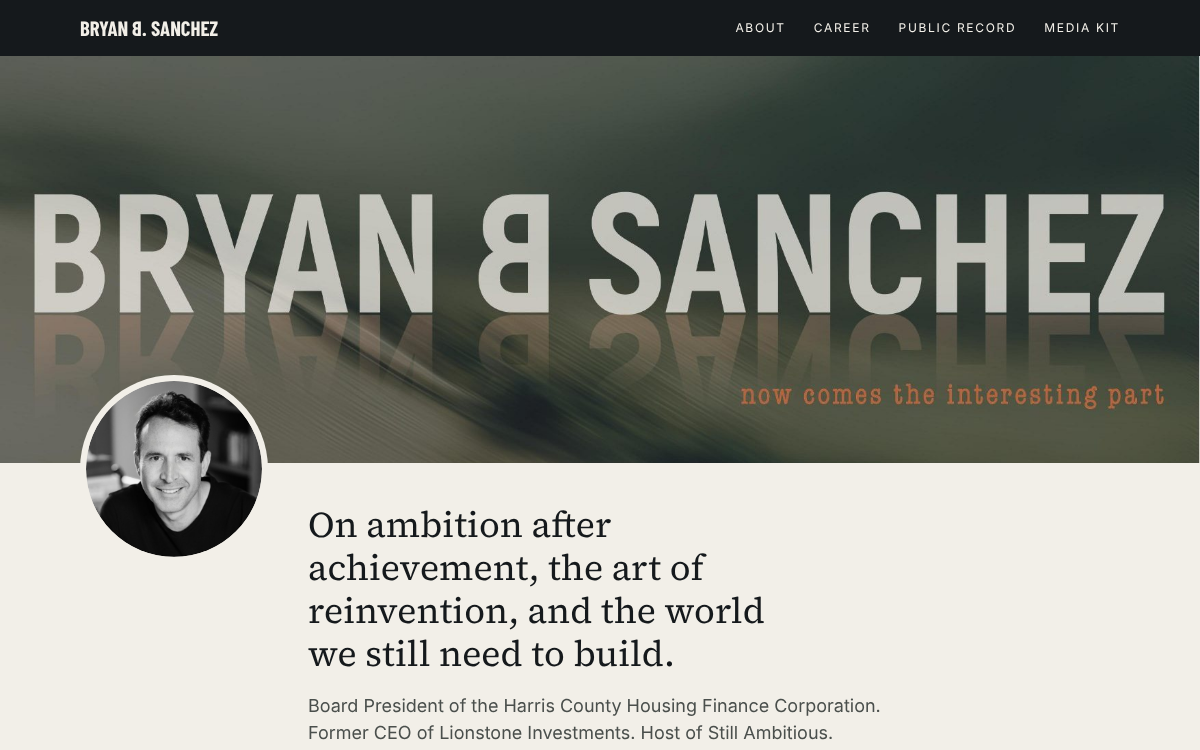
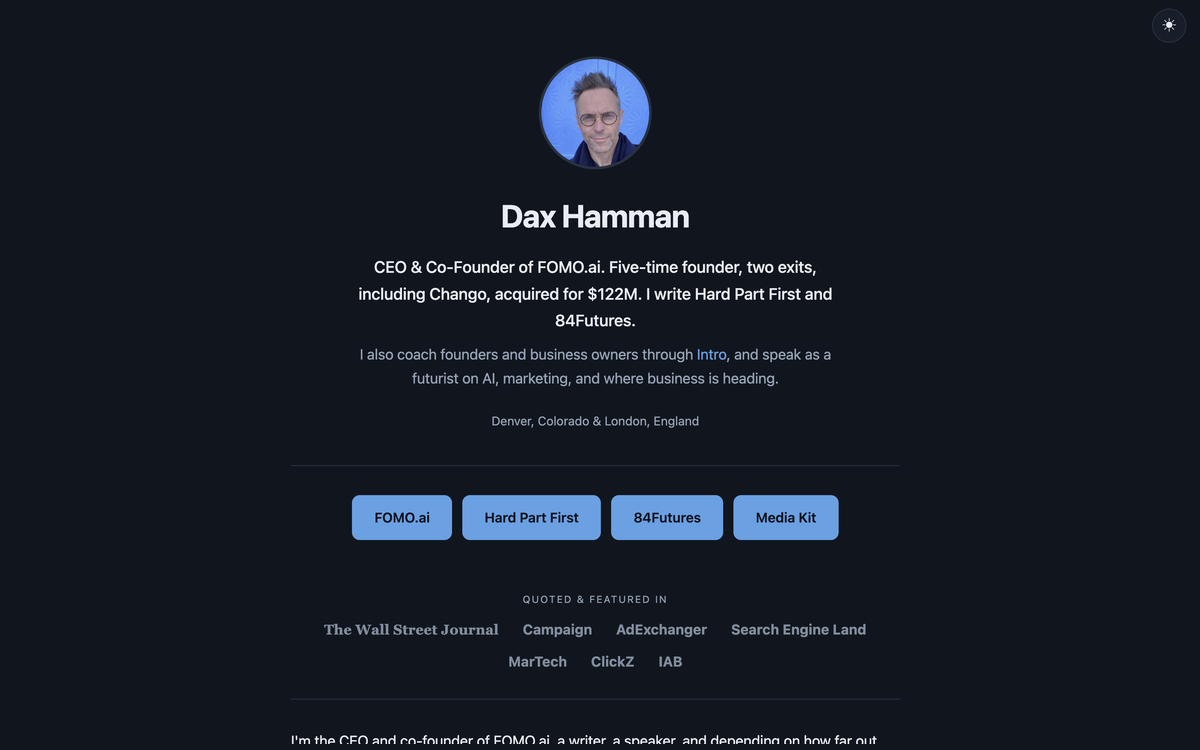
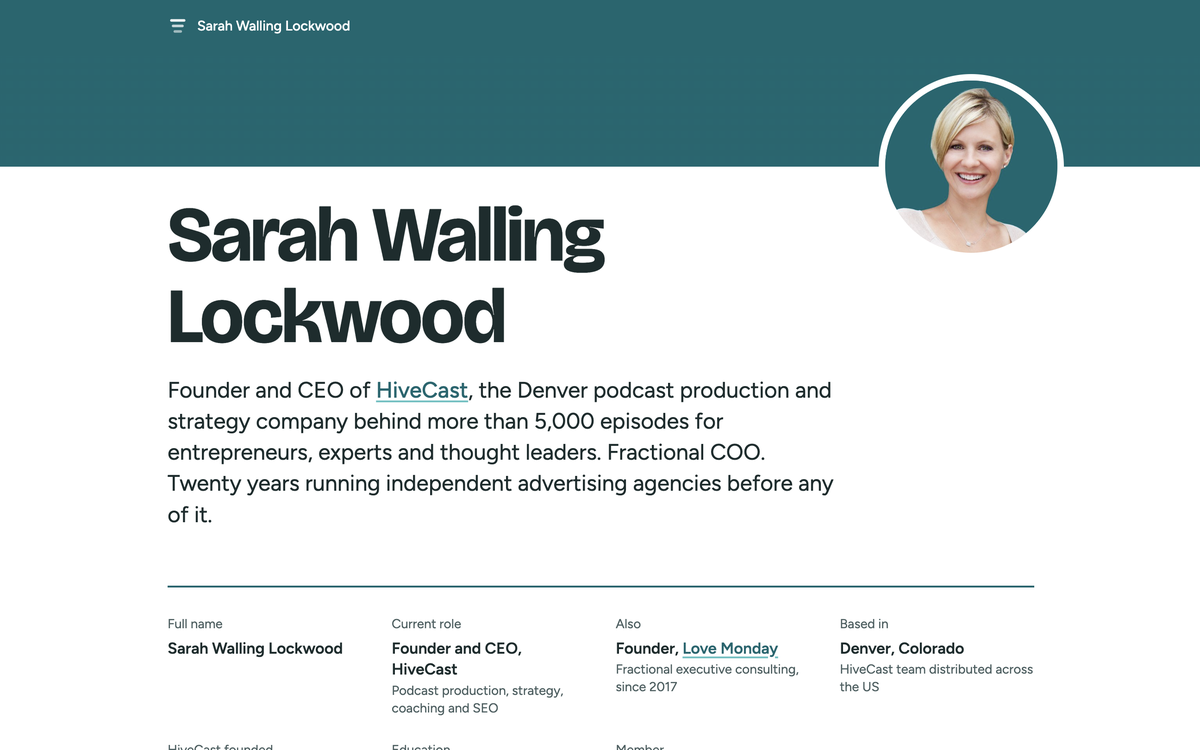
Example MeMyself.fyi profiles

Screenshot of bryanbsanchez.com, Bryan B. Sanchez's profile
Bryan B. SanchezInvestor, board director and host of Still Ambitious
Screenshot of dax.fyi, Dax Hamman's profile
Dax HammanCEO and co-founder, FOMO.ai
Screenshot of joshthurmond.com, Josh Thurmond's profileSeen onShark Tank
Josh ThurmondFounder and CEO, LavaBox Portable Campfires
Screenshot of sarahwallinglockwood.com, Sarah Lockwood's profile
Sarah LockwoodFounder and CEO, HiveCast

When AI knows you, every search works in your favor

Whether a booker asks Google, a music supervisor asks ChatGPT or a curator asks Claude, they get the same accurate answer about who you are, what you have made and where you have played or shown.

01Bookings

The booker checks you and finds you

Your bio, your releases, your past shows and a contact that reaches you, on one page, not spread across five tabs.

02Press

Writers and blogs get it right

One page with your bio in three lengths, approved photos and the correct spelling of every title, so nobody copies an old one.

03Sync and shows

The supervisor or curator sees the whole career

Credits, collaborations, exhibitions and awards, each with its date and its source, connected to you instead of scattered.

04Your name

Google has what it needs to tell you apart

Your record states plainly who you are, where you are based and what you have released, which is what separates you from a namesake.

  • Bookings
  • Press
  • Sync and licensing
  • Exhibitions

Three steps, live in 7 days

Most of the work happens before you say a word, starting with everything already released or shown under your name.

Step 1

Confirm your details

We run a deep scan of everything written about you, including every streaming profile, release, credit, venue and festival listing, gallery page, review and interview that carries your name, and the artists who share it. You confirm which facts are right, and which you want to include. Your Identity Score is taken first, as your day 0 baseline.

Step 2

Your 1:1 Strategy Call

With your facts settled, we set your goal: more clients, a stronger reputation, speaking and press, your next role. That becomes the strategy for your record.

Step 3

We build, you go live

Your record and site are built around that strategy, on your own domain, and announced with a press release. We also bring your Spotify, Apple Music, YouTube, Bandcamp, MusicBrainz and Discogs profiles into line with your record.

Then, every month

Your career keeps moving, and so does what the web says about you. This is what keeps your record current after launch.

Deep scan, re-run

Anything new written about you is found, and waits for your approval before it goes on your record.

Unlimited updates

New role, new talk, new headshot. Send it and it is on your site.

Wikidata, managed

Each scan checks whether you now qualify. Once your entry exists, we keep it accurate as your facts change.

Your AI report

How Google, ChatGPT, Claude and the others describe you this month.

Press releases

Written to be found in Google and AI, tied to your news. How often depends on your plan.

Hosting and upkeep

Your site, your domain email and uptime monitoring, looked after.

The Foundation

$2,500once, delivered in 7 days
  • The deep scanEverything already written about you, found and sorted, including what belongs to someone else with your name.
  • Your new bio home siteCustom designed and built on your own domain, stating who you are and what you have done.
  • Your media kitThe page producers and bookers use to say yes in ten seconds.
  • Your record, confirmedEvery fact about you, sourced and confirmed by you before anything goes live.
  • Optimized bio description for AI searchYour story rewritten dense and sourced, in the exact form AI tools quote correctly.
  • The full hidden layer, on every pageThe structured data Google's knowledge graph and the AI assistants actually read.
  • Every profile brought into agreementLinkedIn, X and the rest, matched to the one name and headshot your site states.
  • Wikidata and Wikipedia, handled honestlyAn entry filed in Wikidata where you qualify, plus a plain readiness check against Wikipedia's own criteria either way.
  • Search Console, set up and trackingConnected to your domain, with indexing requested on both pages.
  • One press release, written and sentDistributed to real news and finance outlets, linked back to your record.
  • Your Identity Score, at day 0 and day 90How well Google, ChatGPT, Claude, Gemini and Perplexity know you, scored out of 100 before we start, rechecked at launch and scored again 90 days after it.
  • Knowledge Panel foundationsEverything Google needs to build one, in place, though only Google decides who gets a panel.
  • The Claim your Google Knowledge Panel courseWalks you through claiming your panel the moment one appears.
  • Your 1:1 Strategy CallOne call to set your goal, whether that is more clients, a stronger reputation or your next role, and settle the topics you own and the angle that gets you booked.

After launch, you choose

Keep your site as it is, or keep it growing. You can move up at any time.

Included with your Foundation

Stay live

No extra chargefor 12 months

Your site stays live for a year, exactly as launched.

  • Hosting and upkeep
  • Wikidata setup (if qualified)
  • Google Knowledge Panel course
  • No monthly deep scan
  • No updates to your record or site
  • No AI report or press releases
  • No ongoing Wikidata management

After 12 months, continue on Evolve or Amplify.

Keep it current

Evolve

$149a month

Your record keeps up with you, every month.

  • Deep scan, re-run monthly
  • Unlimited updates
  • Wikidata, managed
  • Your AI report
  • Hosting and upkeep
  • Press releases quarterly
  • Google Knowledge Panel course

$149 a month, or $1,490 a year, which saves you two months. Leave any time and take your complete site files.

Keep it growing

Amplify

$295a month

Everything in Evolve, plus Google Knowledge Panel coaching and more news going out under your name.

  • Deep scan, re-run monthly
  • Unlimited updates
  • Wikidata, managed
  • Your AI report
  • Hosting and upkeep
  • Press releases monthly
  • Google Knowledge Panel coaching

$295 a month, or $2,950 a year, which saves you two months. Leave any time and take your complete site files.

Add to Evolve or Amplify: podcast placements, about $450 each. Extra press releases, $495 each. Need regular outside coverage? Authority starts at $750 a month, by application. Talk to us about Authority or a custom plan.

Don't let AI give your competition the edge

You might have the stronger catalog, the better live show and the longer list of credits. If AI can describe the other act in detail and can only guess about you, though, the booker sees the opposite. MeMyself pulls your work, your press and your history into one trusted record, so you show up as strong as you are whenever someone compares you.

Case study: Dax Hamman

Before

Google had split Dax (a Founder & CEO) into two people. His record was out of date and his best work was invisible. Investors and hosts looked him up, saw the wrong thing, and moved on.

With MeMyself.fyi

One record of who he is and what he has done, on his own domain, updated with every new interview. Google merged the two profiles and he claimed his knowledge panel in September 2026. AI assistants now describe him accurately and cite dax.fyi as the source.

Result

More podcast bookings. More consultancy relationships. The right investors taking the meeting. Linking the record to his company site (FOMO.ai) and newsletters lifted those in search too. Online, he now looks like the person he actually is.

The web's secret graph

Google, ChatGPT and the other assistants do not read an artist page the way a fan does. Underneath the words there is a hidden layer (called schema) where a page states who someone is in a form Google and AI can trust: this is an artist, they made these works on these dates, and these profiles all belong to them.

The streaming services have that layer for your catalog, which is why Google knows your songs. Almost nothing has it for you. We build it on a domain you own and connect it to the sources that already carry weight, your streaming profiles, your catalog entries, gallery and exhibition pages and your press, so every one of them points back at the same artist.

  • You described once, on a page you own, in the form Google and AI trust
  • Your stage name and your own name connected, so both lead to the same record
  • Spotify, Apple Music, YouTube, Bandcamp and your social profiles marked as the same artist
  • Releases, credits, exhibitions and collaborations connected to you, not just mentioned
  • An entry in Wikidata where you qualify, the open database Google reads directly
  • One name form and one photo across every profile

Read more: Structured data is the hidden graph of the web

Before you ask

I already have a website, a Bandcamp page or a link in bio. Why do I need this?

Keep them. They are built for fans, and they do that job. None of them states who you are in the form Google and the AI assistants read, so none of them answers a booker or a journalist who searches your name. Your record does, and every one of those pages should agree with it and link to it.

Will this get me a Google knowledge panel, or fix the wrong one?

Nobody can promise a panel. Google builds one when it is confident about who you are, and for musicians the streaming catalog often gets it started. We build the rest of what it reads: your own page, one name form, matching profiles and Wikidata where you qualify. When a panel appears we walk you through claiming it.

Another artist has my name. Can that be fixed?

Their panel cannot be taken over, and we would not try. What can be done is to make you unmistakable as a separate artist: your own domain, a record that states where you are based and what you have released, and every profile using one name form and one photo. Recent, consistent evidence is what shifts the balance. If the other act is a major one we will say so plainly.

I perform under a stage name. Whose name goes on the record?

Both, connected. The record leads with the name you are known by and states your own name as far as you want it public, so a search for either one reaches the same page. You confirm every line before it is published.

I am in a band. Is this for the band or for me?

The record is about one person. If you lead or play in a band, the band is stated on your record as a connected thing, with its own profiles and releases, so Google can tell the person and the act apart and see how they relate.

Does this replace my electronic press kit?

It includes one. Your media kit page carries your bio in three lengths, approved photos, links to your work and a contact for bookings, at an address that never changes. If you already have a kit on another service you can keep it and point it at your record.

Do you fix a streaming catalog that is mixed with someone else's?

Only your distributor can separate a merged catalog, and it should happen first, because Google mirrors what the services show. We tell you exactly what to ask for, and the record we build is what keeps the two artists apart afterwards.

I am a painter, illustrator or photographer, not a musician. Does this fit?

Yes. There is no streaming catalog doing part of the work for you, so the record matters more. Your exhibitions, galleries, collections, awards and press each go on it with a date and a source, connected to you.

Will this get me more streams, sales or bookings?

Not directly. It does not pitch playlists, venues or galleries. It makes sure that when your music, your show or your work sends someone to look you up, what Google and the AI assistants say is accurate and complete.

Can my manager or label handle it?

Yes. They can hold the login, answer our questions and approve the monthly updates. The strategy call is the one thing we ask you to attend yourself.

What is the Identity Score?

A free score out of 100 for how well AI and Google know you, run live with you on a call. We ask ChatGPT, Perplexity, Gemini and Google's AI Overview who you are and score five things, 20 points each: recognition, accuracy, distinctness from people who share your name, source strength and consistency. Under 40 means AI is mostly guessing, 40 to 69 means it knows you in part, and 70 and up is strong.

What is the guarantee?

Your Identity everywhere people search. We measure it with your Identity Score before we start and again 90 days after launch, with the same prompts and tools, and if it has not improved the way our Terms set out, we keep working at no extra cost until it has. It is a promise to keep working, not a refund. It applies once you have done your part, and it never promises a knowledge panel or any specific Google feature. The Terms have the detail.

Reading for musicians and artists

Plain explanations, written for people who would rather be working. No pitch inside.