Can you make a Wikipedia page about yourself?

Almost certainly not. Not yet, not by writing it, and not by paying someone to write it for you. Wikipedia decides who gets an article from what independent outlets have already published, and it deletes the rest in public, under your name. The question underneath is a better one: what will Google and ChatGPT read about you instead? MeMyself.fyi answers that in seven days, with a record on your own domain, Wikidata where you qualify, and a plain readiness check against Wikipedia's own criteria.

A woman raising her hand above a crowd of people, lit by golden light

The honest answer, in five questions

Wikipedia's bar for a living person is called notability, and it is not about how good you are at what you do. It is about whether people with no connection to you have already written about you, at length, in places with editors. Score yourself.

  1. Have at least two independent outlets written substantial pieces about you?

    Written about you, not quoting you. Your own site, your company's site, press releases you sent, podcast episodes you appeared on and interviews you gave do not count. A profile in a named publication with an editor does.

  2. Is the coverage about you, rather than about your company with you mentioned?

    A funding story that names the CEO is coverage of the company. A profile of the CEO is coverage of the person. Wikipedia reads the difference strictly.

  3. Did it arrive over time, not in one burst?

    Three articles in the week of a launch, all from the same press release, read as one event. Coverage across years, from different outlets, reads as a public record.

  4. Could a stranger write a neutral article from those sources alone?

    An editor who has never heard of you, with no help from you, no facts from your site, and nothing you told them. If the article would be three sentences long, there is no article.

  5. Would it survive without you?

    No paid editor, no friend with an account, no corrections from you. If the only way the page stays accurate is for you to tend it, it is not a Wikipedia article. It is a bio page in the wrong place.

Five yes answers means you may qualify, and the record below is what an article gets written from. Three or four means Wikidata now and Wikipedia later. Fewer means the record, and that is most people. A Wikipedia page is a result of being known, not a way to become known.

Why paid Wikipedia pages get deleted

Search "Wikipedia page creation service" and a dozen firms will take your money. Here is what you are actually buying.

Writing about yourself on Wikipedia is treated as a conflict of interest and strongly discouraged, and the guidance says that in plain words. Paying someone to do it is the same thing one step removed, with a second rule on top: the Wikimedia Foundation's terms of use require anyone paid to edit to disclose their employer, their client and their affiliation, on the record. A creation service that offers discretion is offering to break the terms of the site it is selling you.

When that is noticed, and it usually is, the article goes to a deletion discussion. That discussion is public, it is indexed, and it stays in the log permanently with your name as its title. The thing you bought to look established becomes a search result that says the opposite.

The firms know this. That is why the good ones say "no guarantees" in the small print, and the rest do not say anything at all.

What Google and the assistants read instead

A Wikipedia article is one source among several, and for most people it is the one they will never have. Google builds a knowledge panel, and ChatGPT, Gemini and Perplexity build an answer, from whatever they can find that agrees: a page on your own domain, your profiles saying the same name and facts, Wikidata where it exists, and the pages other people have written about you. Plenty of people have a panel and no Wikipedia article.

What those systems need is the hidden layer (called schema) on a page you own, stating who you are in a form they can trust: this is a person, they do this, they work here, these profiles are all the same human. That is what a Wikipedia article gives them when it exists, and it is what a record gives them when it does not.

  • You described once, on a page you own, in the form Google and AI trust
  • Every profile you control marked as the same person, in one name form
  • Your companies, books, talks and roles connected to you, not just mentioned
  • An entry in Wikidata where you qualify, with a source on every claim
  • A written readiness check against Wikipedia's criteria, and what would change the answer
  • What Google and the assistants say on day one, at launch and at day 90

Read more: Wikidata for people

The foundation for Google Knowledge Panels and more

Nobody can buy a Wikipedia article, and nobody can buy a knowledge panel either. What can be built is the thing both are made from: a record on your own domain, profiles that agree with it, the pages that back you up, and a Wikidata entry where you qualify, filed by us with a source on every line and never by you. Google and Wikipedia's editors decide the rest, so we promise the record and not the result.

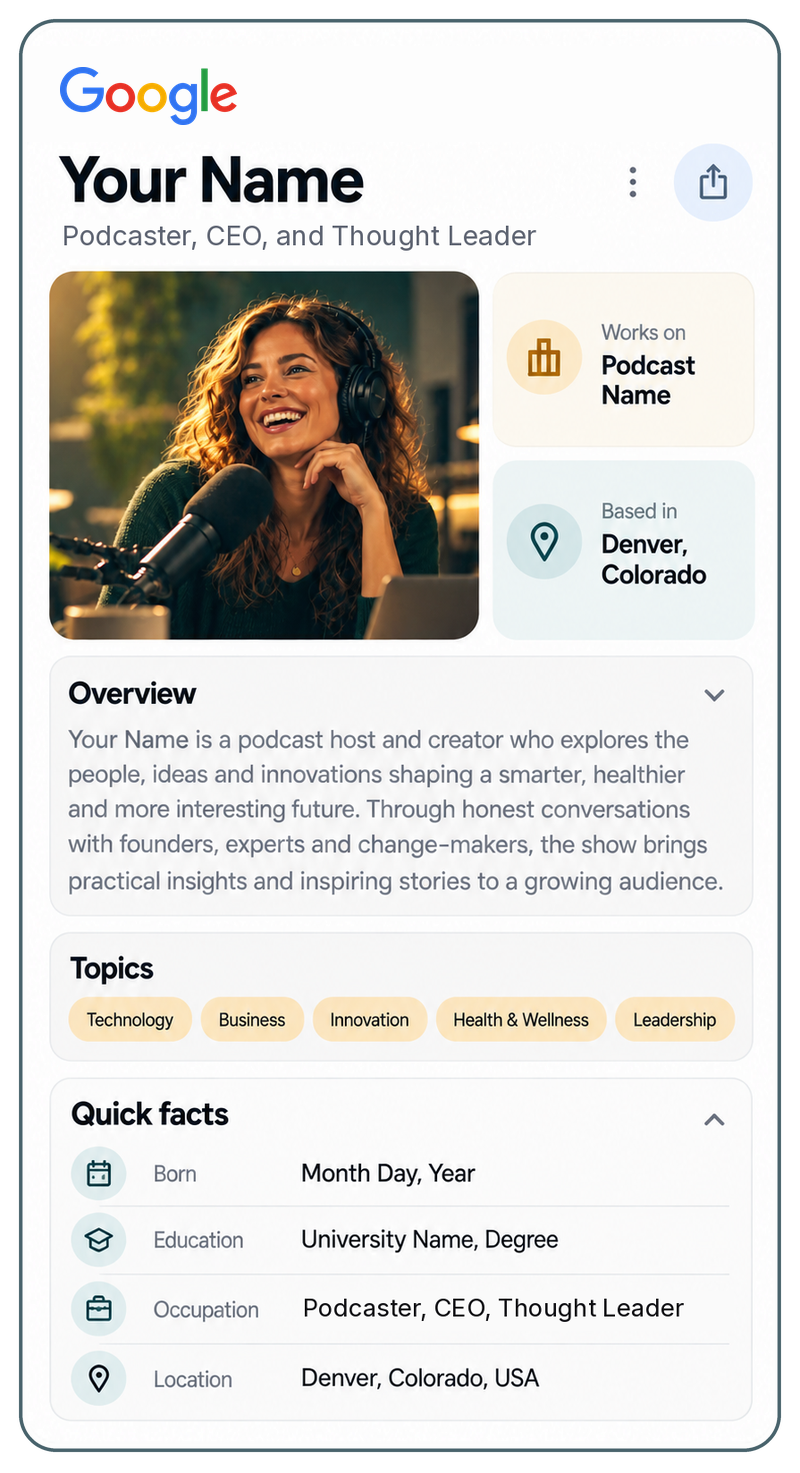
Example of a knowledge panel, with a photo, a short overview, topics and quick facts

Wikidata

The entry you can have now

Wikidata is the open database behind Wikipedia, and Google reads it directly. Its bar is lower than Wikipedia's but it still needs sources: we file the entry where you qualify, reference every claim to an outside page, and keep it in agreement with your record. It is often the first thing to move facts like education and birthplace into a panel.

Google Knowledge Panel

A knowledge panel beside your name

Google builds one when enough trusted sources agree about who you are. The record, the matching profiles, the collected coverage and the Wikidata entry are exactly that agreement. When a panel appears we walk you through claiming it, and after the claim you control the photo, the subtitle and the links.

Wikipedia

A Wikipedia article, for the few who qualify

If your five answers are yes, the record and the collected coverage are what an article gets written from, by an editor with no connection to you, through Wikipedia's own process. We will tell you plainly whether you clear the bar and what would have to change. We will never write or edit the article on your behalf.

Read more: Are knowledge panel services legit?

Seven days, three steps

The first step does most of the work, and for a Wikipedia question it is a conversation about what has actually been written about you, and by whom, not a form.

Day 1

The kickoff call

One conversation about you: who you are, what you have done, and what you want this to do, whether that is a Wikipedia article one day, a knowledge panel, or simply a correct answer when someone checks you. Then we search the web for everything already written about you, including every independent article, interview and listing that mentions you, sorted into what Wikipedia would count and what it would not, and what belongs to a namesake.

Day 4

The strategy and the build

Everything we found becomes a fact set you approve line by line, and nothing unconfirmed goes live. Whether you clear Wikipedia's bar is answered here in writing, with what would have to be true for the answer to change. From it we decide what your record needs to say, then build your site on your own domain, written so Google and the AI assistants can read it, with your media kit alongside.

Day 7

Live, published and tracked

Your site goes live and a press release announces it. We connect Search Console, file Wikidata where you qualify with a source on every claim, and give you a written readiness check against Wikipedia's own criteria, and capture how Google and the AI assistants describe you on day one, at launch and again at day 90, so you can watch them catch up.

What you walk away with

All of it live by day seven. Yours, not rented from a platform.

  • A bio site on your own domainWho you are, what you have done, where to find you. Custom built, hosted at launch, yours and not rented from a platform.
  • The record underneath itEvery fact confirmed by you, your bio rewritten for AI search, and the hidden layer the knowledge graph and the assistants read on every page.
  • Your profiles brought into agreementLinkedIn, X, your company bio and the rest saying the same name and facts, pointing at the same page.
  • A media kit bookers can useThe page producers and bookers use to say yes in ten seconds.
  • A press release at launchWritten, sent to real news and finance outlets, and linked back to your record, so the web has a reason to point at you from day one.
  • Registered where it countsSearch Console connected, a Wikidata entry filed and sourced where you qualify, and a written Wikipedia readiness check either way, never an article written on your behalf.
  • Knowledge panel foundationEverything Google reads to build one, plus the Claim your Google Knowledge Panel course for claiming it. Only Google decides who gets a panel.
  • Your AI answer baselineWhat Google, ChatGPT, Claude, Gemini and Perplexity say about you on day one, at launch and at day 90, so you can watch them catch up.
  • The kickoff and positioning callOne call: what has been written about you and by whom, what this is for, and the angle that earns the coverage notability is made of.

Then, ongoing

Tell us when something happens. A feature in a named outlet, a book, an award, a talk, a new role. It goes into your record, your site updates, and the web gets one more thing that agrees with everything else.

The site is what people see.
The record is what Google & the web read.
You need both.

Example MeMyself.fyi profiles

Three records built this way, none of them with a Wikipedia article, all of them read correctly by Google and the assistants. Yours can look however you want; the hidden layer underneath is the same on every one.

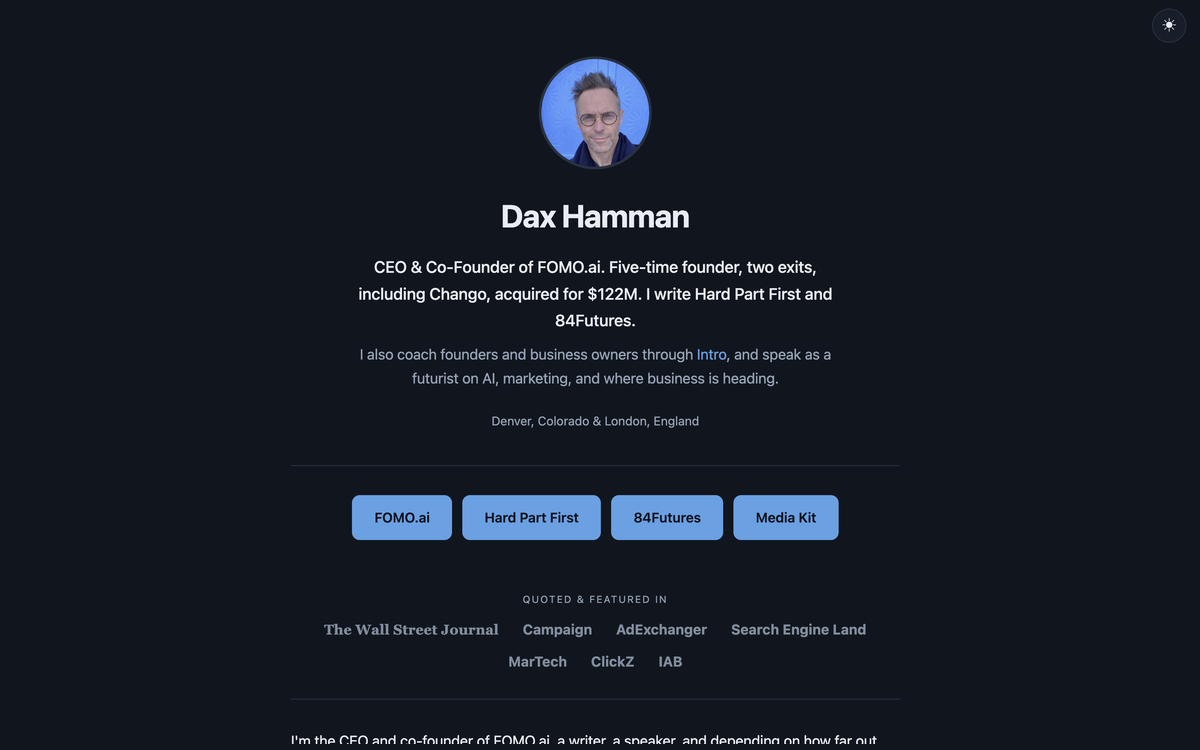
Screenshot of dax.fyi, Dax Hamman's profile
Dax Hamman
Dax HammanCEO and co-founder, FOMO.ai
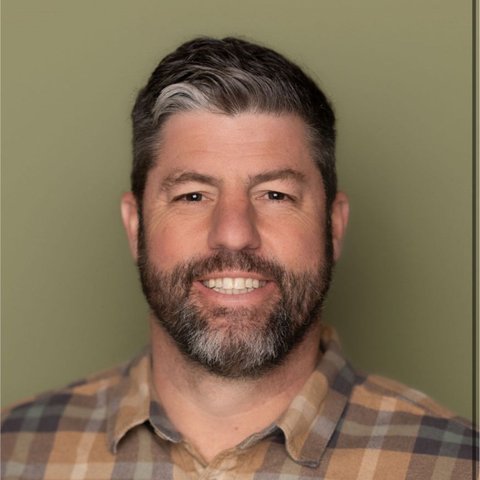
Screenshot of joshthurmond.com, Josh Thurmond's profileSeen onShark Tank
Josh Thurmond
Josh ThurmondFounder and CEO, LavaBox Portable Campfires
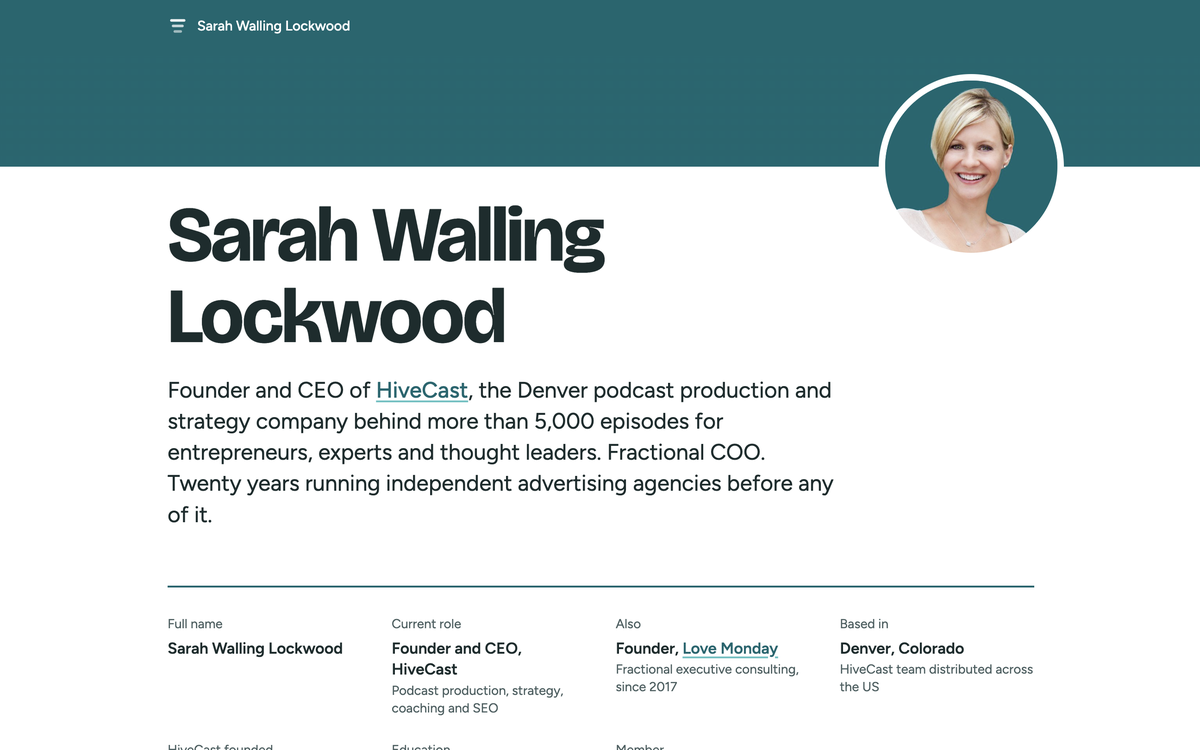
Screenshot of sarahwallinglockwood.com, Sarah Lockwood's profile
Sarah Lockwood
Sarah LockwoodFounder and CEO, HiveCast

Plans

One Foundation to build the record, then Evolve to keep it current, or Amplify to add a press release every quarter. Leave any time and take your files.

Foundation

$2,500once, delivered in 7 days

Build the record.

Every item in the checklist above, live on your own domain by day seven: your record, your site and media kit, your profiles brought into agreement, a press release, Search Console, Wikidata where you qualify and the Wikipedia readiness check either way.

See everything includedHide the full list
  • Your new bio home siteCustom designed and built on your own domain, stating who you are and what you have done.
  • Your media kitThe page producers and bookers use to say yes in ten seconds.
  • Your record, confirmedEvery fact about you, sourced and confirmed by you before anything goes live.
  • Optimized bio description for AI searchYour story rewritten dense and sourced, in the exact form AI tools quote correctly.
  • The full hidden layer, on every pageThe structured data Google's knowledge graph and the AI assistants actually read.
  • Every profile brought into agreementLinkedIn, X and the rest, matched to the one name and headshot your site states.
  • Wikidata and Wikipedia, handled honestlyAn entry filed in Wikidata where you qualify, plus a plain readiness check against Wikipedia's own criteria either way.
  • Search Console, set up and trackingConnected to your domain, with indexing requested on both pages.
  • One press release, written and sentDistributed to real news and finance outlets, linked back to your record.
  • AI answer trackingWhat Google, ChatGPT, Claude, Gemini and Perplexity say about you on day one, rechecked at launch and again at day 90.
  • Knowledge Panel foundationsEverything Google needs to build one, in place, though only Google decides who gets a panel.
  • The Claim your Google Knowledge Panel courseWalks you through claiming your panel the moment one appears.
  • The kickoff and positioning callOne call to get everything we need from you, agree what this is for, and settle the topics you own and the angle that gets you booked.
Starts at site launch

Evolve

$149a month

We keep it current, and your Wikidata entry in agreement with it.

  • New coverage, roles, books and talks added, up to four updates a month
  • Your Wikidata entry kept consistent with your record
  • Hosting, uptime monitoring and a quarterly checkup
  • A monthly report on who is searching your name, a knowledge panel check, and a quarterly review of what AI says about you

$149 a month, or $1,490 a year. Leave any time and take your complete site files.

Amplify

$295a month

Everything in Evolve, plus a press release every quarter.

  • Everything in Evolve
  • One press release a quarter, written for you and sent out
  • Written and optimized to be found in Google, AI Overviews and AI assistants
  • Timed to your news, such as a book, a launch, an award or a new role

$295 a month, or $2,950 a year. Leave any time and take your complete site files.

Claim your Google Knowledge Panel, our course. Included with every plan.

Learn exactly what Google and Wikipedia look for, and whether you meet it: how Google decides who you are, what counts as independent evidence, Wikidata, claiming a knowledge panel, Wikipedia's criteria and the proper routes, and a readiness scorecard that tells you plainly where you stand. We teach the criteria. Google and Wikipedia's editors make the decisions.

See every plan, including Authority, from $750 a month by application, which adds the outside coverage that notability is made of: press releases, podcast guest opportunities, interviews and guest articles. A Wikipedia article and a knowledge panel are results others decide, so we build what they are made from and never promise them.

Compare every plan

IncludedNot included

Foundation$2,500 onceEvolve$149 a month, starts at site launchAmplify$295 a monthAuthorityFrom $750 a month, by application
Site, record, hidden layer and media kitBuiltKept live and true as you changeKept live and true as you changeKept live and true as you change
Hosting, SSL and uptimeAt launchIncludedIncludedIncluded
Email routing on your domain kept workingNot includedIncludedIncludedIncluded
Structured data and health check each quarterNot includedIncludedIncludedIncluded
New appearances, writing, roles and projects addedNot includedUp to four updates a monthUp to four updates a monthIncluded
Search ConsoleSet up, indexing requestedMonthly reportMonthly reportMonthly report
AI answer checkDay one, launch and day 90Quarterly reviewQuarterly reviewQuarterly review
Knowledge panelEverything Google reads to build oneMonthly checkMonthly checkMonthly check
WikidataCreated if you qualifyKept in agreement with your recordKept in agreement with your recordKept in agreement with your record
Press releases, written to be found in Google and AIOneNot includedOne a quarterMore frequent
Podcast guest opportunitiesNot includedNot includedNot includedIncluded
Interviews and PRNot includedNot includedNot includedIncluded
Guest article opportunitiesNot includedNot includedNot includedIncluded
Claim your Google Knowledge Panel courseIncludedIncludedIncludedIncluded
Kickoff and positioning call, plus the readiness checkIncludedNot includedNot includedNot included

Don't let the absence of an article decide for you

Most of the people you compete with do not have a Wikipedia article either. What some of them have is a record Google and the assistants can read, which is why ChatGPT describes them in a paragraph and describes you in a guess. MeMyself pulls your roles, your work and your authority into one trusted record, so the absence of an article stops being the whole story.

Case study: Dax Hamman

Before

Google had split Dax (a Founder & CEO) into two people. His record was out of date and his best work was invisible. Investors and hosts looked him up, saw the wrong thing, and moved on.

With MeMyself.fyi

One record of who he is and what he has done, on his own domain, updated with every new interview. Google merged the two profiles and he claimed his knowledge panel in September 2026. AI assistants now describe him accurately and cite dax.fyi as the source.

Result

More podcast bookings. More consultancy relationships. The right investors taking the meeting. Linking the record to his company site (FOMO.ai) and newsletters lifted those in search too. Online, he now looks like the person he actually is.

A woman smiling in a crowd of people, lit by golden light

A site that loads instantly, never breaks, and is always yours

No WordPress, no plugins, no database. Your page is pure: your words and the hidden layer the assistants read, served from Cloudflare's global network, with nothing inside it that can be hacked, auto updated or quietly changed.

Read: how your site is built and hosted
  • Nothing changes without your approval. No plugin update rewrites a page, no template adds a word you did not confirm. What you approved is what stays live.
  • Nothing to hack. No login page, no database, no admin panel. There is nothing on the site for anyone to break into.
  • Fast everywhere. A pure page passes Google's loading tests on a phone without trying, which matters when someone checks you between meetings.
  • Ready for AI agents. The first visit is increasingly an AI assistant researching you for someone else. A clean page with the hidden layer gives it one clear answer in one read.
  • Yours, unlike an article. A Wikipedia page belongs to Wikipedia and anyone can edit it. The domain is registered to you, and nothing on the record changes unless you say so.

Before you ask

Can I create a Wikipedia page about myself?

Wikipedia's own guidance calls writing about yourself a conflict of interest and strongly discourages it, and an article about a person who does not meet the notability bar is deleted whoever wrote it. If you clear the bar, an editor with no connection to you writes it from published sources, through Wikipedia's own process. If you do not, no amount of writing changes that.

How do I get a Wikipedia page?

You do not get one. You become the subject of one, when enough independent outlets have written about you that a stranger could write a neutral article from those sources alone. The work that leads there is the same work that gets you described correctly everywhere else: a clear record, profiles that agree with it, and real coverage from named outlets over time.

Can you pay someone to make a Wikipedia page?

You can, and firms will take the money. Anyone paid to edit must disclose their client under the Wikimedia Foundation's terms of use, so a service that offers discretion is offering to break the rules of the site it is selling you. When that is noticed the article goes to a public deletion discussion with your name as its title, and that log is permanent. We do not write or edit Wikipedia articles for anyone.

How much does a Wikipedia page cost?

A legitimate one costs nothing and cannot be bought. What you can pay for is the record an article would be written from, and a Wikidata entry where you qualify: the Foundation, $2,500 once, delivered in 7 days, then Evolve at $149 a month to keep both current.

What is Wikipedia notability for a person?

Significant coverage of you, in several reliable sources that are independent of you, with editorial oversight. Your own site, press releases, podcast appearances and interviews where you are the one talking do not count. A profile of you in a named publication does. The five questions above are that rule in plain words, and Wikipedia's own page on notability for people is linked on this page.

What is Wikidata, and is it the same thing?

Wikidata is the open database behind Wikipedia, and Google reads it directly. Its bar is lower than Wikipedia's, but every claim still needs an outside source. Where you qualify we file the entry as part of the setup and keep it in agreement with your record. It is not an article and nobody reads it for pleasure, which is exactly why it is useful: it is facts, sourced, in the form the systems trust.

Does a Wikipedia page get you a Google knowledge panel?

Not on its own, and nobody can promise a panel either way. Google builds one when enough sources agree about who you are, and a Wikipedia article is one source among several. Plenty of people have a panel and no article, because their own page, their profiles and Wikidata agree.

Will MeMyself write my Wikipedia article?

No. We build the record, file Wikidata where you qualify, and give you a written readiness check against Wikipedia's criteria with what would have to change. If you clear the bar, the article is written by an editor with no connection to you. That is the only kind that survives.

Will I get a Google knowledge panel?

Nobody can promise that. Google decides when it is confident, and we build the record it reads, make every source agree, and teach you the claim process for the day it appears.

Reading on Wikidata and Wikipedia

Plain explanations, written for people rather than brands. No pitch inside.

Read: all posts on knowledge panels and Wikidata