A media kit is not a second bio. It is the page a producer opens the night before your interview to find your intro, your topics, your photo and your name spelled correctly, and it has one job: let them press record without emailing you. Most media kits fail that job because they were written to impress rather than to be used.
There is a second, quieter reason to get this right. If your media kit and your home page both read as biographies, Google treats them as two versions of the same thing and cannot decide which to show. The home page owns the facts about you. The media kit owns the logistics of booking you. Anything that could live on either goes on the home page, and the kit links to it.
What a producer is actually looking for
Put yourself at their desk. They have a recording tomorrow and a guest they half remember booking. They need: how to say your name, two sentences to introduce you, what you can talk about, three questions to start with, a photo that will not pixelate on the episode art, a link for the show notes, and someone to email if the Zoom link breaks. That is the whole kit.
The eight sections, in order
- One line and a link to the bio. Your name, your title, your company, and a link reading "full bio" that goes to your home page. Not the bio itself. One line.
- Pronunciation. Written phonetically, in a sentence a host can read aloud. "Dax like tax; Hamman like hammer without the r, plus n." If it is obvious, still include it; the host does not know it is obvious.
- Approved intro. Two or three sentences the host can read word for word, in third person, in the present tense. This is the single most used part of the kit. Write it the way you want to be introduced, and keep it under forty seconds spoken.
- Topics. Three to five subjects you can go deep on, each with a line explaining the angle. Fewer is better; a guest who can talk about everything gets booked for nothing.
- Suggested questions. Six to ten, grouped under the topics. Hosts will use at least two of them verbatim. Make them questions you have good answers to.
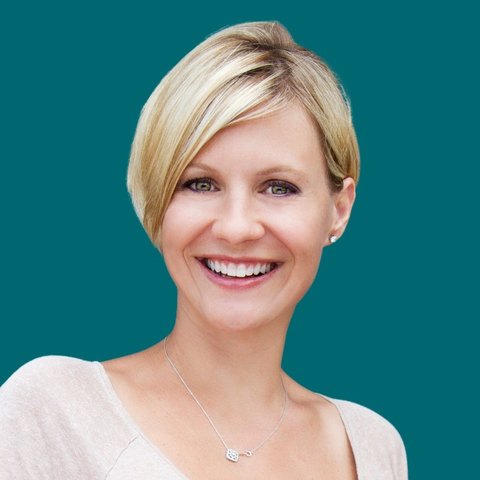
- Headshots. Two or three, at full resolution, with a download link, the same photo you use on every profile first. Horizontal and square versions if you have them. Never a phone export.
- Recent appearances. A table: show, episode title, date, link. This is the one place the full list lives; the home page carries a short pointer to it. It proves you have done this before and shows the host what you sound like.
- Contact and logistics. An email on your domain, your time zone, your preferred recording setup, and the address of your home page for the show notes, labelled as such. Hosts will link whatever you tell them to link.
Writing the intro a host will actually read
The approved intro is the most used sentence you will ever write and most people write it badly, because they write it for themselves. Hosts read it aloud, cold, usually once. So: third person, present tense, under forty seconds spoken, which is about ninety words. Lead with what you are known for, not your job title; "She helps subscription businesses fix their pricing" is readable, "She is a strategic growth leader" is not. Include the one credential that matters to this audience and leave the rest. Name the company and the book if you have one. End on something a host can riff on: where you are based, or a detail that invites a question.
Seventy words. The host can read it in twenty five seconds and has a first question ready.
Questions that get used, and ones that do not
Hosts pick questions they can imagine the conversation flowing from. "What is the biggest mistake companies make with pricing?" gets used because it has an obvious follow up. "Tell us about your journey" does not, because it is the question every guest offers and every host already has. Write questions that only you could answer well, that start a story rather than a list, and that sit squarely inside the two or three topics you want to be booked for. Six to ten of them. If you cannot think of ten you are known for too many things, which is its own problem.
Formats that work and ones that break
A page on your own domain is the only format that gets found, indexed and linked. A PDF is fine as a download from that page but useless on its own: hosts cannot copy from it on a phone, search engines barely read it, and it is out of date the day you export it. A Canva one sheet is a PDF with better fonts. A link in bio page is a list of links, not a kit, and it lives on someone else's domain. A Notion page is readable but tells the machine nothing about you and can vanish behind a login. Build the page, keep a PDF export for the hosts who ask, and update the page first every time.
What stays off the kit
Your career history. Your education. Your birthplace. Your mission statement. Logos of outlets that have quoted you, if the home page already carries them. Anything a producer does not need in order to press record. All of it belongs on the home page, which is the canonical record, and duplicating it here is how you end up with two bios competing for one name.
A kit audit you can do in ten minutes
Open your current kit, or whatever a host would find if they searched your name plus "media kit". Then answer honestly: can they say your name correctly from it? Is there an intro they could read aloud without editing? Are the topics fewer than six and specific? Are there questions, and would you want to be asked them? Can they download a headshot at full size, and is it the same photo as your LinkedIn? Is there a list of past appearances with working links? Is there an email on your own domain? Does every bit of biography link back to your home page rather than repeating it? Eight questions. A kit that passes all eight gets you booked without a reply email. Most pass three.
Keeping it alive
A kit decays in two ways: the appearances table stops at a date, and the intro drifts out of sync with your current role. Both are fixed by a monthly habit, five minutes, where you add any new episode to the table, check the intro still describes the job you have, and refresh the questions if your topics have moved. Put the date of the last update at the bottom; hosts notice when it is recent and it is a small honesty signal that costs nothing.
The machine layer
The kit page carries a WebPage node whose main entity is the Person node on your home page, plus an ImageObject for the headshot. It does not carry its own Person. Person schema: what to put on your own site explains why that distinction matters. The appearances table can also be marked up, each row as an episode naming you, which is what makes the list count for the graph rather than only for the host.
Before the episode, after the episode
Send the host the kit link, your exact name, and the intro, in the email that confirms the recording. After release, add the episode to the table the same week and check the show notes carry your name and your home page. Podcast appearances are the new press clippings covers the rest of that loop.